
You just discovered an AI tool that promises to create an entire marketing video from your script in three minutes. No camera work, no editing decisions, no creative choices. Just paste your text, and the AI assembles everything.
Sounds like magic, right?
Then you watch the result. The pacing feels robotic. The cuts happen at awkward moments. Stock footage appears that technically matches your words but completely misses your message. And the whole thing just feels…flat. Boring. Generic.
Welcome to the harsh reality of AI video creation. The promise is incredible efficiency. The delivery? Videos that look like every other AI-generated video on the internet.
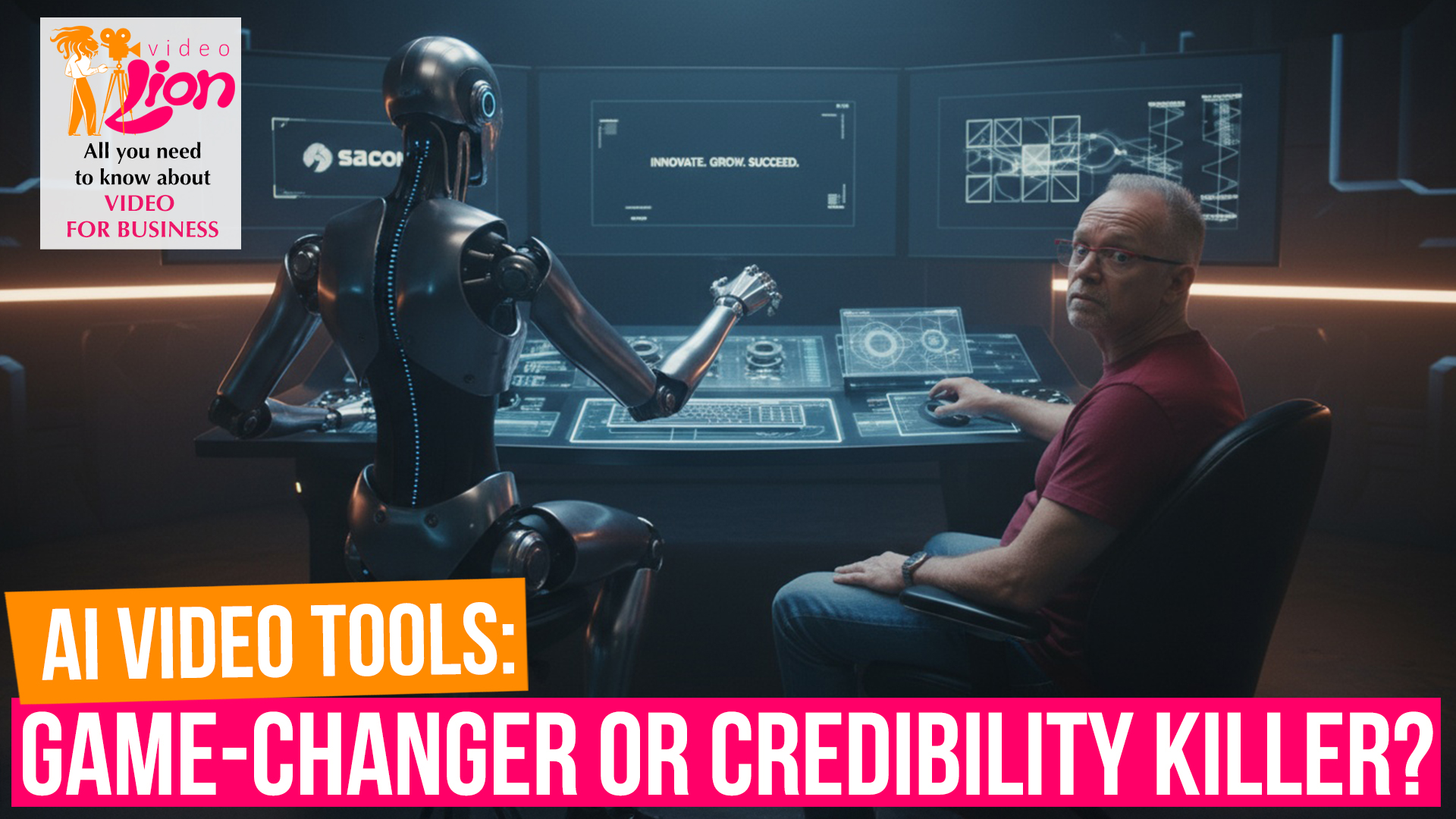
In today’s Video Lion, I’m showing you the uncomfortable truth about AI video tools—where they actually help and where they create bland, forgettable content that wastes your time and kills your credibility.
Come with me!
The Editing Problem Everyone Ignores
AI companies want you to believe that video editing is just technical assembly. Cut here, transition there, add some music. They treat it like data processing.
But that’s not what editing is.
Editing is storytelling. It’s knowing when to hold on someone’s face for an extra beat to let emotion land. It’s understanding which take captures the right energy, even if it’s technically imperfect. It’s feeling the rhythm of how information should flow to keep people engaged.
AI doesn’t understand any of this. It can’t feel pacing. It can’t recognize authenticity. It doesn’t know that sometimes the “mistake” is actually the most human, compelling moment in your video.
When AI edits your video, it makes technically competent decisions that end up creating emotionally dead content.
Why AI-Generated Videos All Look the Same
You’ve seen them. Those AI-generated videos where generic stock footage rolls while a synthetic voice reads a script. Maybe there are some text overlays. Maybe some transitions that the AI decided were “appropriate.”
They all feel identical because they’re all following the same algorithmic logic. The AI matches keywords to footage, adds standard transitions, and calls it done.
The result? Every AI-generated video about “productivity tips” looks interchangeable. Every AI video about “customer success” uses the same tired stock footage of people shaking hands and pointing at screens.
This isn’t creativity. It’s pattern matching. And your audience can feel the difference immediately.
Where AI Actually Helps
All that being said, AI isn’t useless for video. On the contrary, it can be very useful. But you need to understand what it can legitimately do versus what it pretends to do.
Transcription and captioning? AI crushes this. Fast, accurate, and nobody cares whether a human or machine created those captions. Use AI here confidently.
Audio cleanup? AI works like magic. Removing background noise, balancing levels—these are technical problems AI handles exceptionally, saving you time and money.
Video enhancement assistance helps if you’re starting from a decent baseline. AI can help you improve exposure and color balance, and resolution.
Script drafting and outlining can give you a starting point. Let AI help you brainstorm or structure ideas, then rewrite everything in your actual voice.
Social media clipping. AI is excellent at clipping longer videos into effective short social media posts.
But notice what all these tasks have in common? They’re technical support, not creative decision-making. They’re tools that enhance human work, not replacements for human judgment.
The Storytelling Gap
What AI can’t do is understand story. It can’t recognize the moment where you need to slow down because the concept is complex. It doesn’t know when to speed up because the energy is dragging.
AI doesn’t understand that your slight fumble when explaining something difficult makes you more relatable, not less professional. It doesn’t know that showing your genuine reaction to a question is more valuable than a perfectly smooth take.
Real editing is about making decisions that serve the story and the audience. Should this section be longer or shorter? Does this cut feel jarring or dynamic? Is this the take that makes people believe you, or just the one that’s technically cleanest?
These are judgment calls that require understanding human psychology, narrative structure, and authentic communication. AI isn’t close to handling any of it. Not yet.
The Bland Content Trap
The biggest danger of AI-generated videos isn’t that they look bad. It’s that they look okay enough that you might use them—and okay is the enemy of effective.
An AI-generated video won’t have obvious flaws that make you cringe. It just won’t have anything that makes people care. No personality. No unique perspective. No reason for anyone to remember it five minutes after watching.
In a world drowning in content, “acceptable but forgettable” is the worst possible outcome. You’ve spent time and money creating something that accomplishes nothing.
The Human Advantage
Humans editing video make choices that algorithms can’t. We cut to the moment that feels right, not the moment that matches a formula. We understand context, subtext, and the subtle communication happening beyond the words.
We know when to break the rules because breaking them serves the story. We recognize authenticity even when it’s imperfect. We create pacing that keeps people engaged because we understand what engagement actually feels like.
This is why human-edited videos—even ones made on smartphones with basic editing software—can feel more compelling than AI-generated productions with perfect stock footage.
The Bottom Line
Use AI for what it’s genuinely good at: technical tasks that speed up your workflow without affecting creative decisions. Captions, transcription, audio cleanup, scripting, video enhancing, etc.
But don’t let AI edit your videos. Don’t let it make creative choices. Don’t let it turn your unique message into generic content that looks like everyone else’s.
Your audience doesn’t just want information. They want connection. They want to feel something. They want to know there’s a real human who cares enough to actually show up.
AI can’t deliver that. And until it can, the companies that win at video marketing will be the ones who understand that efficiency without authenticity is just efficient failure.
That’s it for today. Before you go, don’t forget to give us a like or leave a comment, and, if you haven’t done it yet, subscribe to our channel to stay informed about everything related to video for business.
See you in the next Video Lion!